Before D’ART Shtajio became a name people connected with Black representation in anime, Arthell Isom was an artist trying to get closer to the work. His path is a reminder that representation is not only about who appears on screen. It is also about who gets to draw the backgrounds, shape the visual language, lead the room and decide which stories deserve a foundation.
FROM NEW JERSEY TO TOKYO
Isom’s interest became specific through the atmosphere and art direction of anime such as Ghost in the Shell. He moved to Japan to study animation and entered a competitive industry with its own language, process and culture.
The goal was to understand animation from the inside: drawing, compositing, background art, deadlines, revisions and the long hours required to turn a storyboard into a finished scene. That kind of study takes humility. It also turns admiration into a working vocabulary.
D’ART SHTAJIO: A FOUNDATION, NOT A LABEL
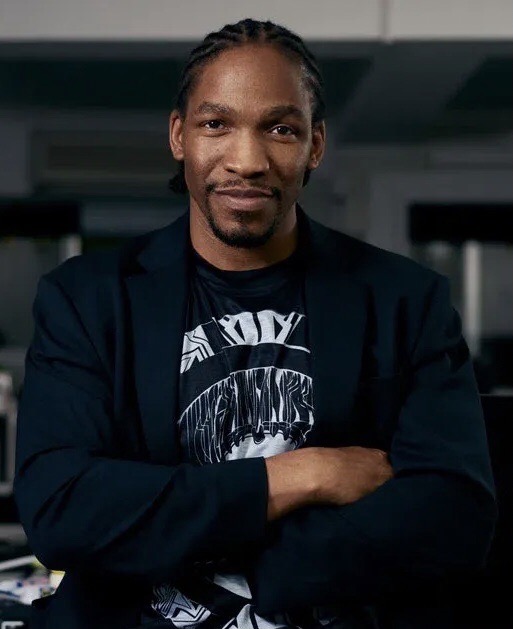
In 2016, Arthell and his twin brother Darnell Isom founded D’ART Shtajio with animator Henry Thurlow. The studio became known as Japan’s first major Black-owned anime studio, but the most important part of that description is what the studio does with the opportunity.
The name carries a philosophy. It combines “shitaji ga daiji”—the idea that the foundation is important—with “studio.” In animation, a strong foundation can mean the backgrounds, layout and visual decisions that allow a scene to hold together. For D’ART Shtajio, it also means building a foundation for artists, clients, collaborators and stories that need room to grow.
That position connects Japanese production knowledge with global clients and influences. It is not a rejection of the anime tradition. It is an expansion of who can participate in shaping its next chapter.
WHY BLACK-OWNED ANIME PRODUCTION MATTERS
Representation is often discussed through characters, but production matters just as much. Black-owned studios create opportunities on the business and creative side of the medium. They give Black artists more chances to make decisions, build teams and treat Blackness as lived experience and imagination—not only as a design element.
Anime is a medium for stories, not a locked box. When a studio makes space for different histories and visual instincts, the medium gets bigger. The creator does not have to become less of themselves to be legible inside it.
THE LESSON FOR THE NEXT GENERATION
The useful lesson is not simply “make it abroad.” It is the discipline underneath the journey: learn the medium, respect the people who taught you, keep your point of view and build systems that help other people enter the room.
D’ART Shtajio resonates because it shows how those ideas can live together. The foundation is Japanese animation craft. The structure is collaborative. The point of view is Black. None of those elements has to cancel the others.
For the next generation, that is an invitation to keep learning, keep making and keep building room. A studio can be a workplace, a bridge and a declaration of possibility at the same time.
COMMENTS
Your name and comment will be public. Your email stays private and is never displayed.
Loading comments…